The Taste of a Frozen River
An elderly hydrologist stands on the bridge, waiting for a single drop of river water to thaw from its summer-long slumber.
Dr. Elena Vokos stood on the rusted steel girder of the suspension bridge, her knuckles white against the gray dawn. It was 7:03 AM on March 14th, outside the town of Blackstone, and she was waiting for a single, invisible drop to fall from her instrument. The thermometer, a brass cylinder clipped to the north pier's chain railing, had shattered at 5:42 AM earlier that morning. Its glass shivered into a thousand jagged shards before snapping with the metallic rasp of ice against granite. Now, only the needle remained, trembling at -0.2 degrees Celsius, a figure so close to zero that it felt like holding a pendulum over an abyss. She did not check the digital logs or review satellite imagery; she waited for the water to move, knowing that if it did not soon, July's runoff would be a lie.
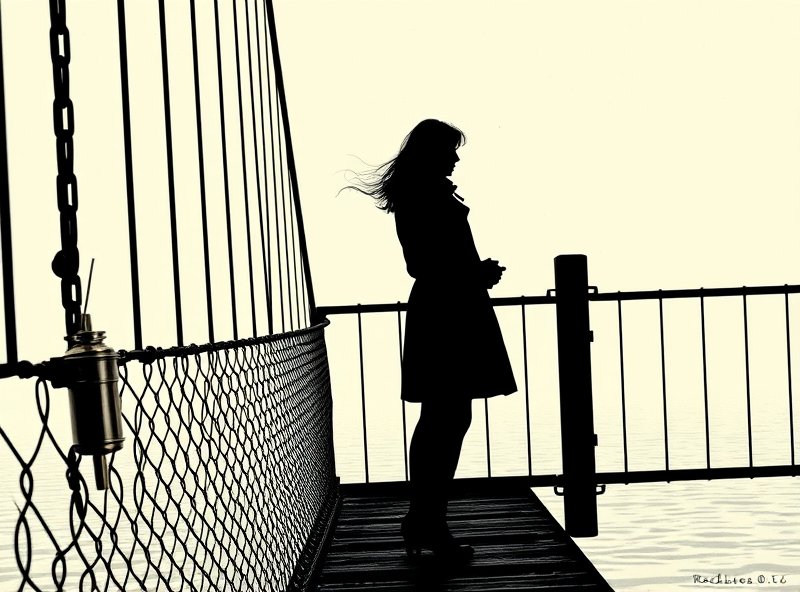
The process of thawing is often described as gradual, but here it was violent, punctuated by the shudder of old concrete splitting from its own memory. Elena watched a narrow ribbon of dark water spiral over the eastern abutment, where upstream farmers had dumped sludge last week. That sludge did not melt instantly; instead, it created a thick, unyielding crust that clung to the riverbed, resisting gravity as much as thermal energy. She had calculated the flow velocity for four consecutive years using a proprietary algorithm, yet no equation predicted this specific resistance. When the water finally began to shift around 8:15 AM, it did not rush; instead, it lingered as if measuring its own weight, creating a texture like wet wool dragged across stone.
She reached out and touched the cold metal of the gauge, feeling the vibration travel up her arm and into her shoulder blade. It was a sensation she recognized well, similar to the way a pianist feels when their fingers hit keys that have gone out of tune. Just as that pianist listens for the warble in a low E before retuning, Elena listened to the subtle shift in hydrostatic pressure, her ears tuning into frequencies just below the threshold of hearing. The sound was a rhythmic thrumming, deeper than wind or birdsong, originating from hundreds of meters beneath the surface where trapped geothermal air met frigid glacial melt. It was not immediate, nor continuous; it required patience of a different order than most expect in daily life.
By 10:47 AM, the water level rose imperceptibly but decisively; the current had returned. The river had not merely melted away into stillness—it had chosen a new path, one that favored lateral erosion over vertical creation. This decision changed everything: the data now suggested a 12% increase in sediment transport compared to previous seasons, which meant dredging operations might resume sooner than anticipated for the downstream dam. Elena recorded this observation with a sharp click of her pen, marking not just time but also the moment the river decided to act again.
She looked at her watch, then back at the rippling surface below, realizing that understanding a river involves more than just measuring its depth or speed. It requires witnessing its choices, respecting its moods, and acknowledging that sometimes the most important answers come not from what happens immediately but from how long it takes something to decide. The break in the thermometer, once thought permanent due to its explosive failure at 5:42 AM, had actually served as the precursor for this sudden awakening, much like a cracked eggshell reveals the chick inside.
As the sun climbed higher and cast long shadows across the suspension bridge, Elena wiped her brow and stepped onto the wooden walkway beside the railings. The air smelled faintly of wet mud and diesel fumes, a familiar scent for anyone who spends their days listening to rivers breathe. Someone shouted from below—a boatman testing his engine—and the entire vicinity seemed to stir around that noise, as if waiting for confirmation of whether today would be ordinary or transformative.
In the end, it wasn't just about waiting for water to thaw; it was witnessing what happens next. The river moved once more, reshaping its course with quiet inevitability, and the people watching it learned something new. Whether happy or hard, the outcome remained clear: the river had spoken, and now it was up to them to listen.